Hearing Loss
Hearing loss explained
Conductive, sensorineural or mixed? Understand the types, degrees and what they mean for your hearing.
Read articleNoise, age, genetics and health. What damages hearing — and how much of it you can actually prevent.
Hearing loss has many causes, and often more than one is at play. Some are unavoidable, but a surprising amount is preventable - which makes understanding them genuinely useful.
Here are the main culprits our audiologists see.
Loud work, music or hobbies damage inner-ear hair cells over time - and it's permanent.
Natural wear on the inner ear (presbycusis) is the most common cause overall.
Family history, diabetes and heart conditions can all affect hearing.
Some medicines and infections can harm hearing, occasionally suddenly.
Much noise-related damage is avoidable, and other risks can be managed with the right care.
Whatever the cause of any existing loss, the hearing you have now is worth protecting. The biggest avoidable risk is loud noise - so using protection at gigs, around power tools or at the range, and keeping personal music at sensible volumes, genuinely pays off.
Looking after your general health helps too: managing blood pressure and diabetes, not smoking, and getting sudden changes checked promptly all support long-term hearing.
Conductive, sensorineural or mixed? Understand the types, degrees and what they mean for your hearing.
Read article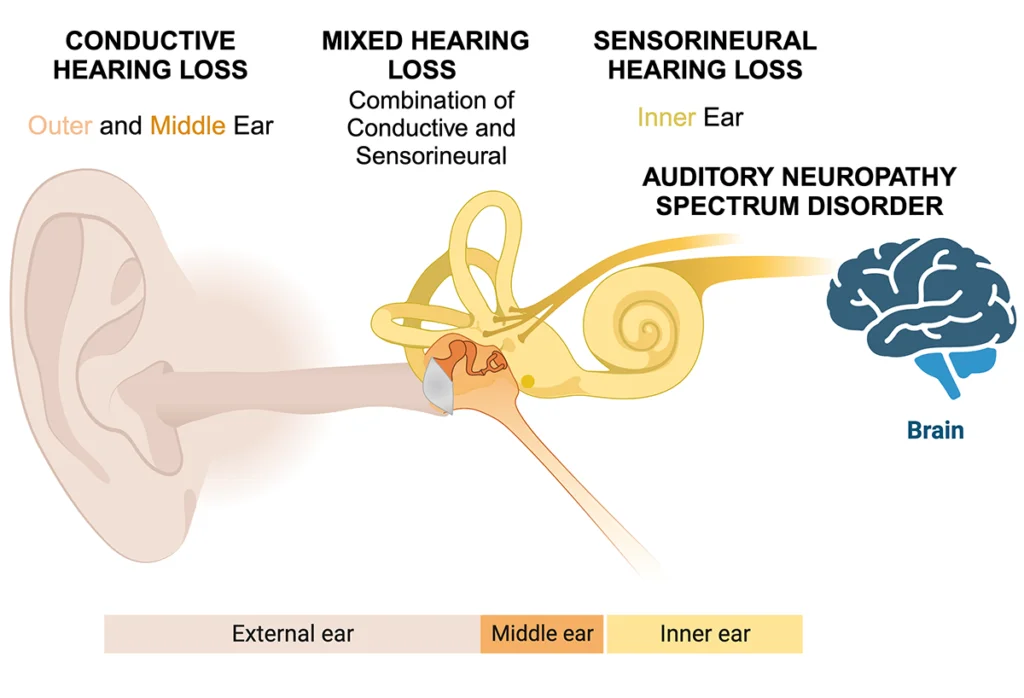
Turning the TV up, missing words in noise, asking people to repeat — the early signs worth taking seriously.
Read article
Presbycusis affects most of us eventually. Why it happens so gradually, and what you can do about it.
Read articleA certified audiologist, clinical-grade equipment, and unhurried care - all in the comfort of your home. Most appointments within 48 hours.