Hearing Loss
Hearing loss explained
Conductive, sensorineural or mixed? Understand the types, degrees and what they mean for your hearing.
Read articleTurning the TV up, missing words in noise, asking people to repeat — the early signs worth taking seriously.
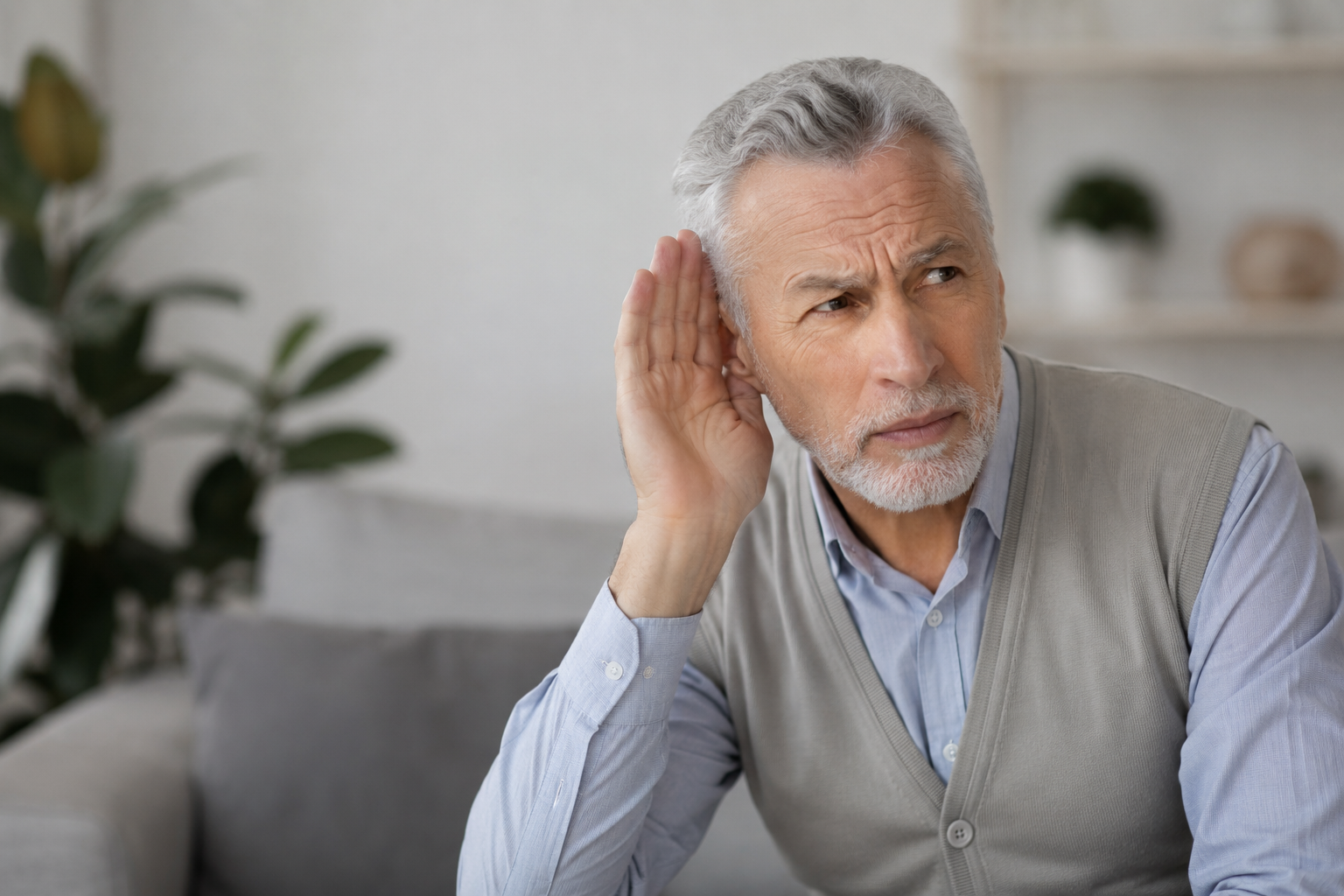
Because hearing usually fades slowly, the signs are often blamed on other people 'mumbling' or rooms being 'too noisy'. Recognising the real pattern is the first step to getting help.
None of these alone means serious loss - but if several feel familiar, a quick test is worthwhile.
Asking people to repeat themselves, or mishearing similar-sounding words.
Struggling to follow callers, or pressing the phone hard to one ear.
Finding restaurants, parties and groups far harder than quiet one-to-ones.
Tick the ones you notice. A few is reason enough to book a simple hearing check.
Yes, but 'normal' doesn't mean you have to put up with it - most age-related loss is very manageable.
Sooner is better. Acting early keeps your brain used to processing the full range of sound.
Not at all. A hearing test is quick, comfortable and completely painless.
Because hearing fades gradually, the brain quietly adapts - so it rarely feels like 'my hearing is going'. Instead it feels like everyone has started mumbling, restaurants have got noisier, or the television needs turning up. It's far easier to blame the world than to notice the change in ourselves.
That's completely human, but it's also why so many people wait years longer than they need to. A quick, painless test removes the guesswork entirely.
Conductive, sensorineural or mixed? Understand the types, degrees and what they mean for your hearing.
Read article
Noise, age, genetics and health. What damages hearing — and how much of it you can actually prevent.
Read article
Presbycusis affects most of us eventually. Why it happens so gradually, and what you can do about it.
Read articleA certified audiologist, clinical-grade equipment, and unhurried care - all in the comfort of your home. Most appointments within 48 hours.